Target flavour
Set the target for spice intensity, salt, heat and herb notes in the finished product. A dry blend will not taste the same after cooking or reconstitution.

From dry seasonings to marinades and sauce bases: an approach that brings flavour, texture and production requirements together.
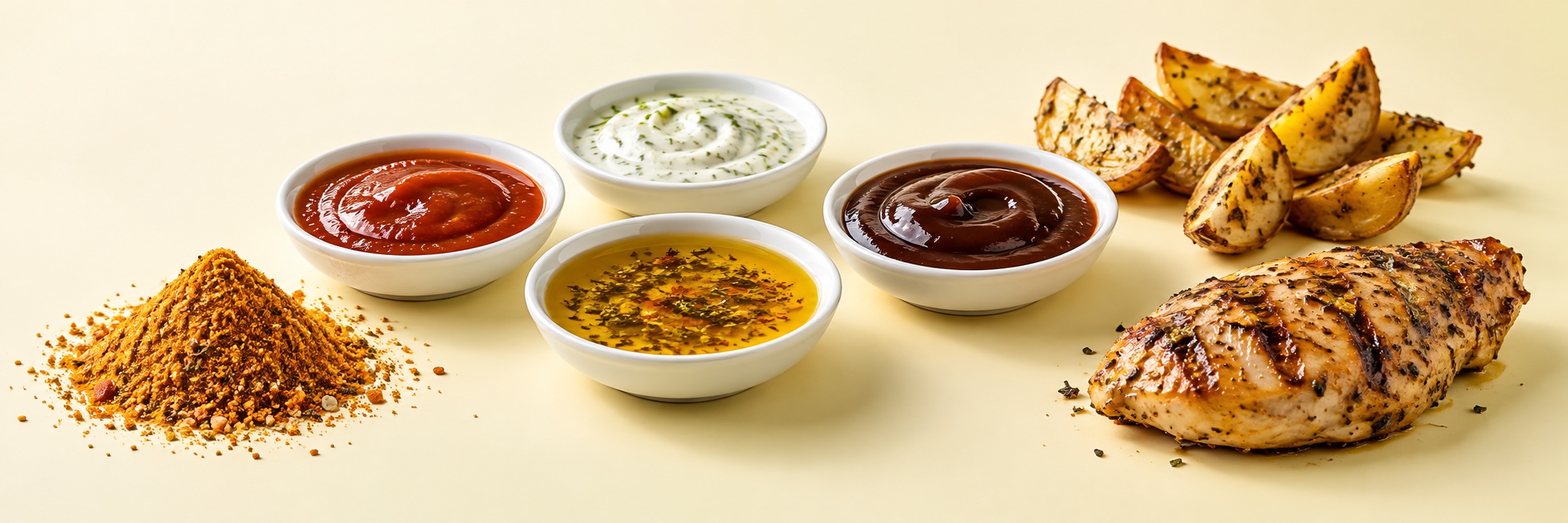
Set the target for spice intensity, salt, heat and herb notes in the finished product. A dry blend will not taste the same after cooking or reconstitution.
Powder blends, liquid marinades and thick sauces require different dosing and mixing methods. Select the format around the production line.
Define a standard preparation method and measurable acceptance criteria. Comparing taste, texture and appearance under the same conditions makes recipe changes easier to assess.
Potatoes, vegetables, meat and prepared meals
Paprika, black pepper, cumin, garlic, onion and dried herbs offer a starting point for different flavour profiles. Salt and spice intensity need to be balanced in the finished food, rather than judged from the seasoning alone.
Particle size, blend uniformity, surface adhesion and dosing during production.
Meat, poultry, fish and vegetable applications
Oil-based, water-based and emulsified marinades provide different ways to carry seasoning onto food. Garlic, paprika, pepper and herb profiles are considered alongside the desired flavour, colour and cooking method.
Coating level, surface coverage, holding time and appearance after cooking.
Tomato, spiced and creamy recipes
Tomato powder, onion, garlic and spices can form the flavour base. Depending on the recipe, starches or hydrocolloids may be considered separately for texture. Seasoning and thickening ingredients perform different roles.
Reconstitution ratio, lump-free dispersion, viscosity after heating and texture during service.
Yoghurt, mayonnaise or plant-based bases
Garlic, onion, dill, parsley and pepper can be selected to complement the base. A blend can taste quite different in two bases with different fat levels, acidity and texture.
Compatibility with the base, spice distribution, texture after standing and water separation.
Grilled foods, wings, burgers and glazes
Paprika, chilli, garlic and spices are balanced with sweetness, acidity and, where appropriate, smoke notes. The way heat builds and whether it masks other flavours matter as much as its intensity.
Consistency of heat, coating behaviour and performance when exposed to heat.
Soups, sauces, stocks and prepared meals
Yeast extracts, vegetable ingredients and spices can be considered to build savoury depth and a fuller flavour. Their contribution to salt and taste needs to be assessed within the complete recipe.
Target flavour, salt balance, interaction with other ingredients and ingredient declaration.
Ingredients are formulation examples. Final composition and use level vary with the selected blend.
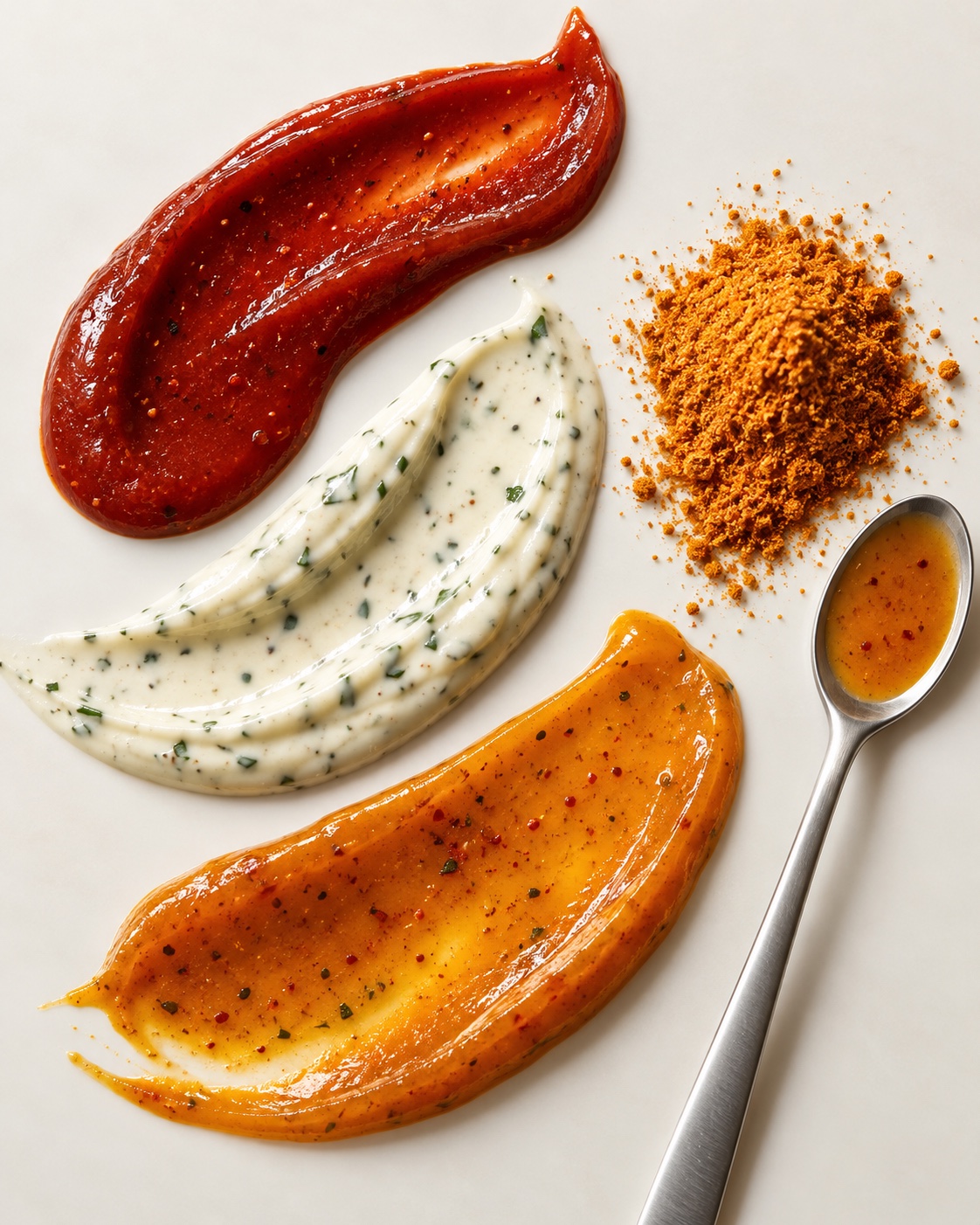
Spice profile, flavour intensity and sauce structure are developed with different ingredients. A well-balanced recipe brings these functions together around the finished product.
A sauce, marinade and dry seasoning may need different blends. Start with the finished product and the flavour you want.
Trial the blend in your own recipe. Check flavour, texture and appearance after cooking and holding.
Review the ingredients and allergens. Confirm the use level, storage conditions and shelf life against the product specification.
Discover Meat, Cajun, Fajita and the other blends in our collection, with ideas for using each one.